Tell us about the job
Takes about a minute. No obligation.
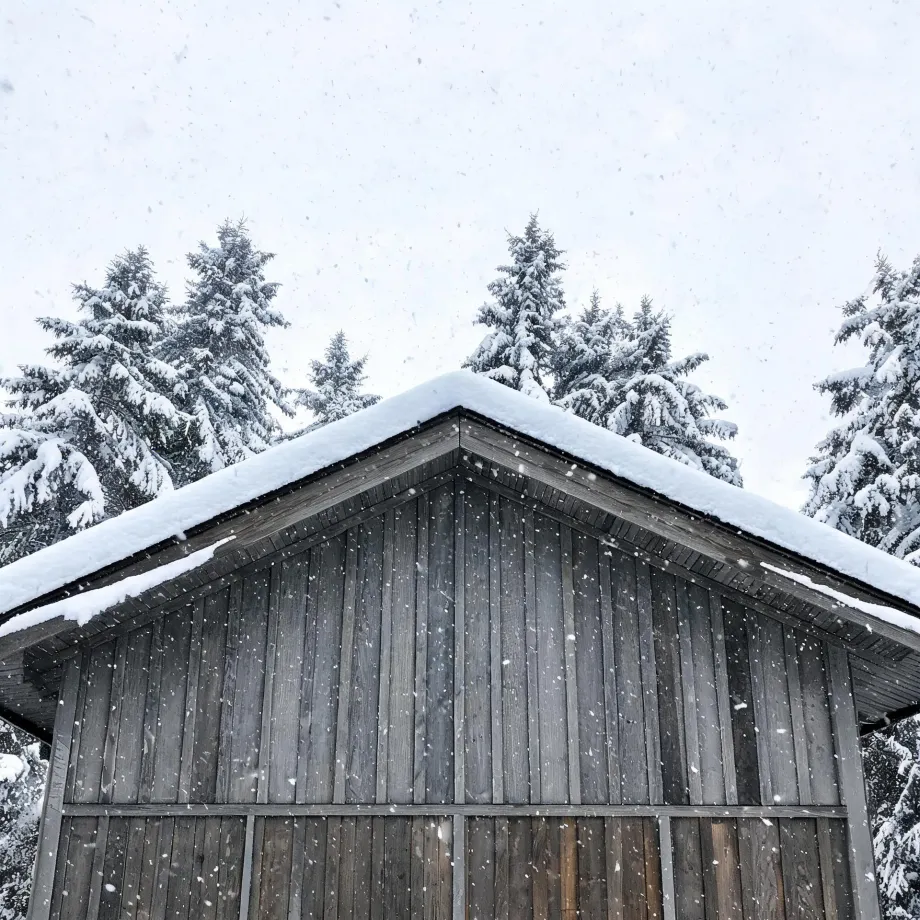
Sizing a heat pump for Big Horn County starts with how far outdoor temperatures drop at the hard end of the season, because a heat pump's output falls as the cold deepens. Homes in Big Horn County, WY run heat about ten months a year, from September through June. The compressor and the reversing valve carry nearly continuous duty through those months, and a unit that covers average conditions can leave the house short when temperatures bottom out. A contractor has to calculate the actual coldest load and match back-up resistance heat to whatever the refrigerant circuit cannot cover at that point.
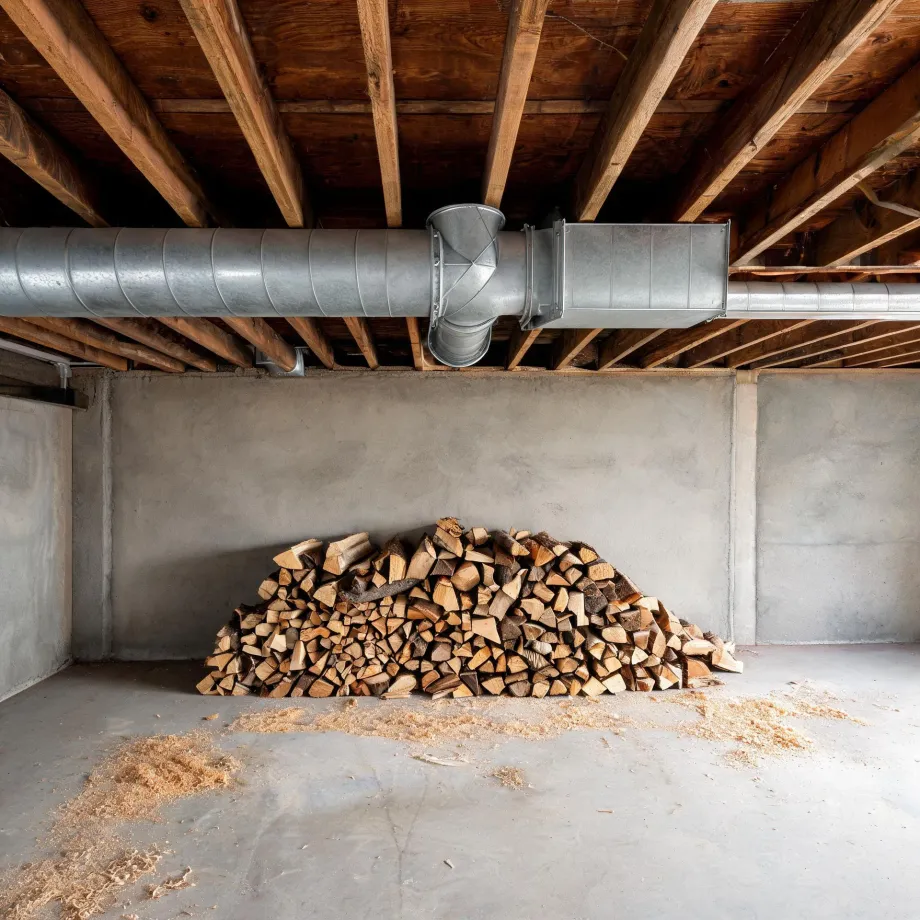
Ductwork sized and routed for an older forced-air system does not automatically carry a heat pump's airflow requirements, and what a contractor finds in the walls here shapes the scope of the job before any equipment gets ordered. Half the homes in Big Horn County, Wyoming were built in 1968 or earlier (2020-2024 ACS 5-year). That vintage of construction was ducted around the equipment of its day, which means a contractor quotes the existing trunk lines and branch runs first, not last. Where the ductwork passes, the electrical service gets the same look, since the load a heat pump draws is a different number than what the original panel was laid out to feed.
What a Heat Pump Installation Puts in Your Home
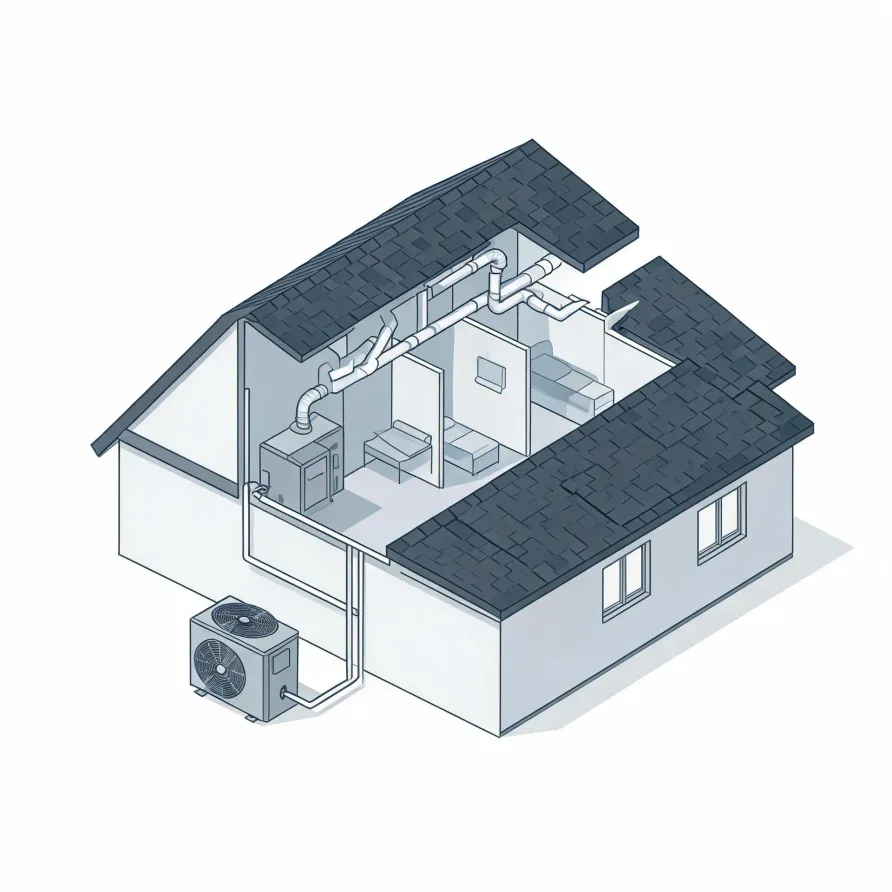
The outdoor unit is the piece most homeowners notice first. It sits on a pad outside the house and holds the compressor and the outdoor coil, which together do the main work of moving heat. Inside, the air handler mounts in a mechanical room, closet, or attic space and pushes conditioned air through the home.
A refrigerant line set runs between the two units, connecting the outdoor pad to the air handler through a small penetration in the wall. A thermostat goes on an interior wall where it reads the living space temperature and tells the system when to run.
The drawing shows a typical layout, and a licensed contractor determines what the installation looks like in your specific house.
Find a contractor in Big Horn CountyBig Horn County, by the numbers
97 severe weather events were recorded in Big Horn County, Wyoming between 2015 and 2024.
NOAA National Centers for Environmental Information, Storm Events Database, bulk CSV export, events 2015-01-01 through 2024-12-31.Half the homes in Big Horn County, Wyoming were built in 1968 or earlier (2020-2024 ACS 5-year).
U.S. Census Bureau, 2020-2024 American Community Survey 5-Year EstimatesBig Horn County, Wyoming holds 5,372 housing units (2020-2024 ACS 5-year).
U.S. Census Bureau, 2020-2024 American Community Survey 5-Year EstimatesOwners occupy 75.9% of the occupied homes in Big Horn County, Wyoming (2020-2024 ACS 5-year).
U.S. Census Bureau, 2020-2024 American Community Survey 5-Year EstimatesWeather Load in Big Horn County
Heating and cooling equipment works against the climate outside, and the workload varies by county. A heat pump sized and installed for what Big Horn County actually delivers will hold up where a generic spec may not.
97 severe weather events, 2015–2024. Source: NOAA National Centers for Environmental Information, Storm Events Database.