Tell us about the job
Takes about a minute. No obligation.
A heat pump running a repair call in Teton County has already put continuous load on its compressor and reversing valve, parts that take the hardest cycling in any heat pump system. Homes in Teton County, WY run heat in every month of the year. That unbroken runtime wears the reversing valve's solenoid and the compressor's internal valves in ways that a system with a long idle period simply does not see. A contractor pricing a repair here checks both before concluding the fault sits elsewhere.
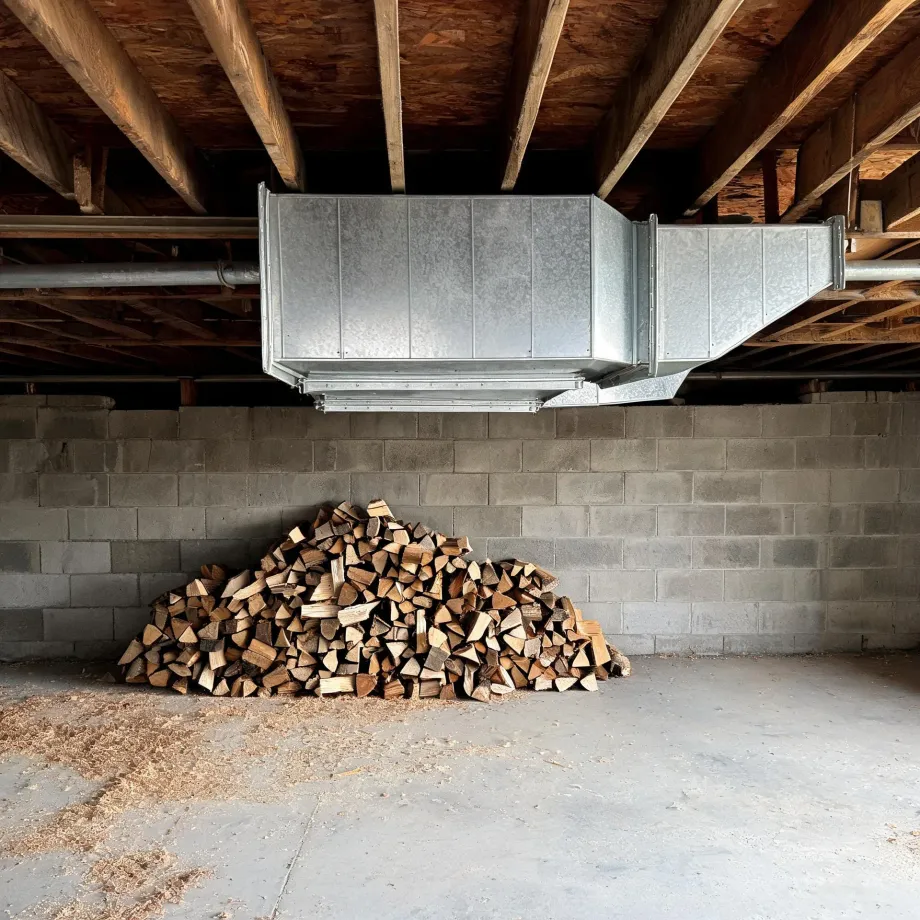
Refrigerant lines, contactors, and run capacitors in this housing stock carry a load of accumulated wear that a service history alone will not show. Half the homes in Teton County, Wyoming were built in 1989 or earlier (2020-2024 ACS 5-year). That means a contractor opening a heat pump here reads the physical condition of what is inside: the state of the refrigerant charge, the capacitor's actual tested capacity, the contactor's surface condition. Parts that have been cycling through Jackson Hole winters since the equipment was first installed fail in ways that are specific to how hard those winters pushed the system. The opened unit is where the repair scope gets decided.
The Parts of a Heat Pump a Contractor Checks First
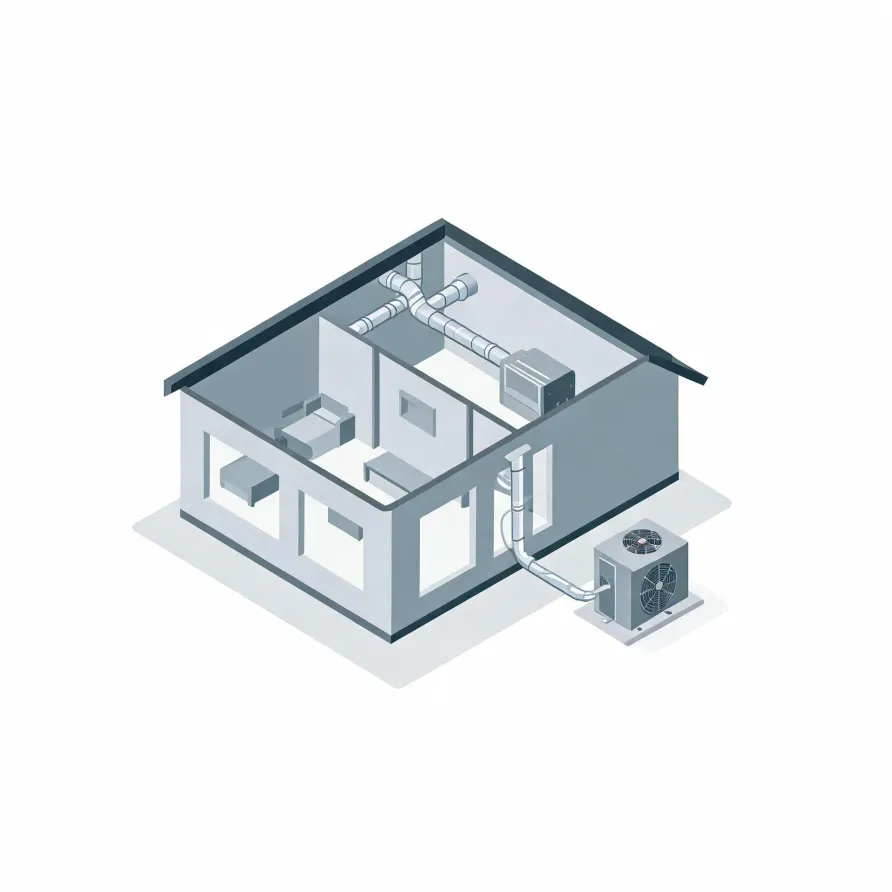
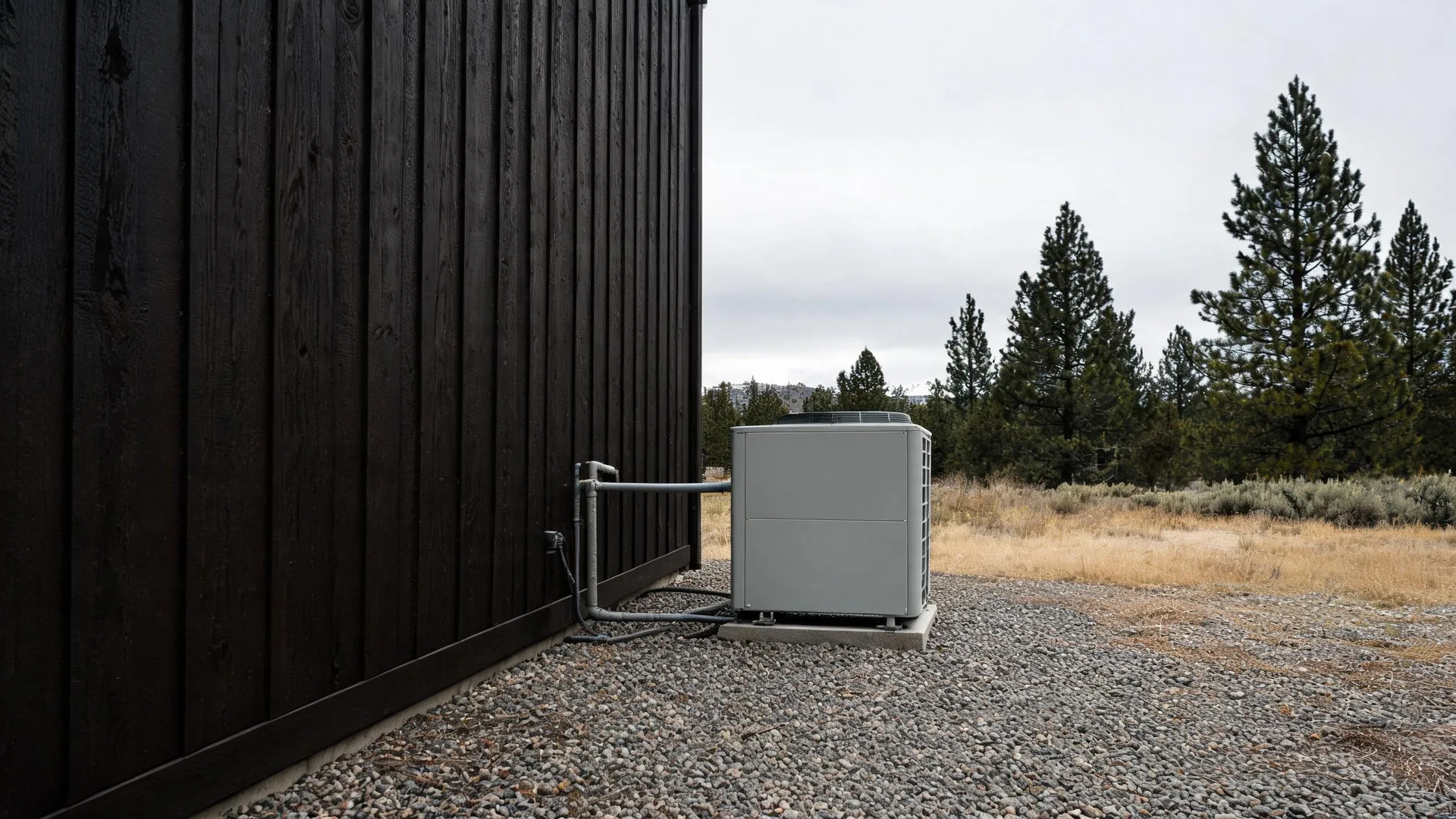
The outdoor unit sits outside the home on a concrete pad or wall brackets and holds the compressor and the outdoor coil. The compressor is where most repair calls start. When the outdoor coil or the compressor is the problem, the whole system either stops moving heat or strains to do it.
Inside the house, the air handler holds the indoor coil and the blower fan, and it connects to the rest of the system through the refrigerant lines that run between the two units. The reversing valve, which lives inside the outdoor unit, is what lets a heat pump heat and cool. A contractor checks both the air handler and that valve when the system runs but will not switch modes.
The drawing shows the general layout of a heat pump system, and a licensed contractor determines which components apply to your specific home and situation.
Find a contractor in Teton CountyTeton County by the numbers
231 severe weather events were recorded in Teton County, Wyoming between 2015 and 2024.
NOAA National Centers for Environmental Information, Storm Events Database, bulk CSV export, events 2015-01-01 through 2024-12-31.Half the homes in Teton County, Wyoming were built in 1989 or earlier (2020-2024 ACS 5-year).
U.S. Census Bureau, 2020-2024 American Community Survey 5-Year EstimatesTeton County, Wyoming holds 13,658 housing units (2020-2024 ACS 5-year).
U.S. Census Bureau, 2020-2024 American Community Survey 5-Year EstimatesOwners occupy 58.3% of the occupied homes in Teton County, Wyoming (2020-2024 ACS 5-year).
U.S. Census Bureau, 2020-2024 American Community Survey 5-Year EstimatesSevere Weather Events in Teton County
Extreme weather puts heat pumps under sustained stress, and how hard the equipment works over time shapes what repairs it eventually needs. Knowing the weather load in Teton County tells you something real about what local systems go through.
231 severe weather events, 2015–2024. Source: NOAA National Centers for Environmental Information, Storm Events Database.